
Matched betting — the practice of using bookmaker free bets and promotions to guarantee a profit regardless of the outcome — is well-established in UK football markets. The concept is straightforward: place a qualifying bet at a bookmaker, receive a free bet, then use a betting exchange to lay the opposite outcome and lock in a return. Around 10% of the UK population bets on sport online, and a dedicated subset of those bettors focus entirely on extracting value from promotional offers. What fewer people realise is that basketball handicap markets can be used for matched betting too, though the process carries specific challenges that football does not.
Back-Lay Mechanics: Executing Matched Betting on Basketball Handicaps
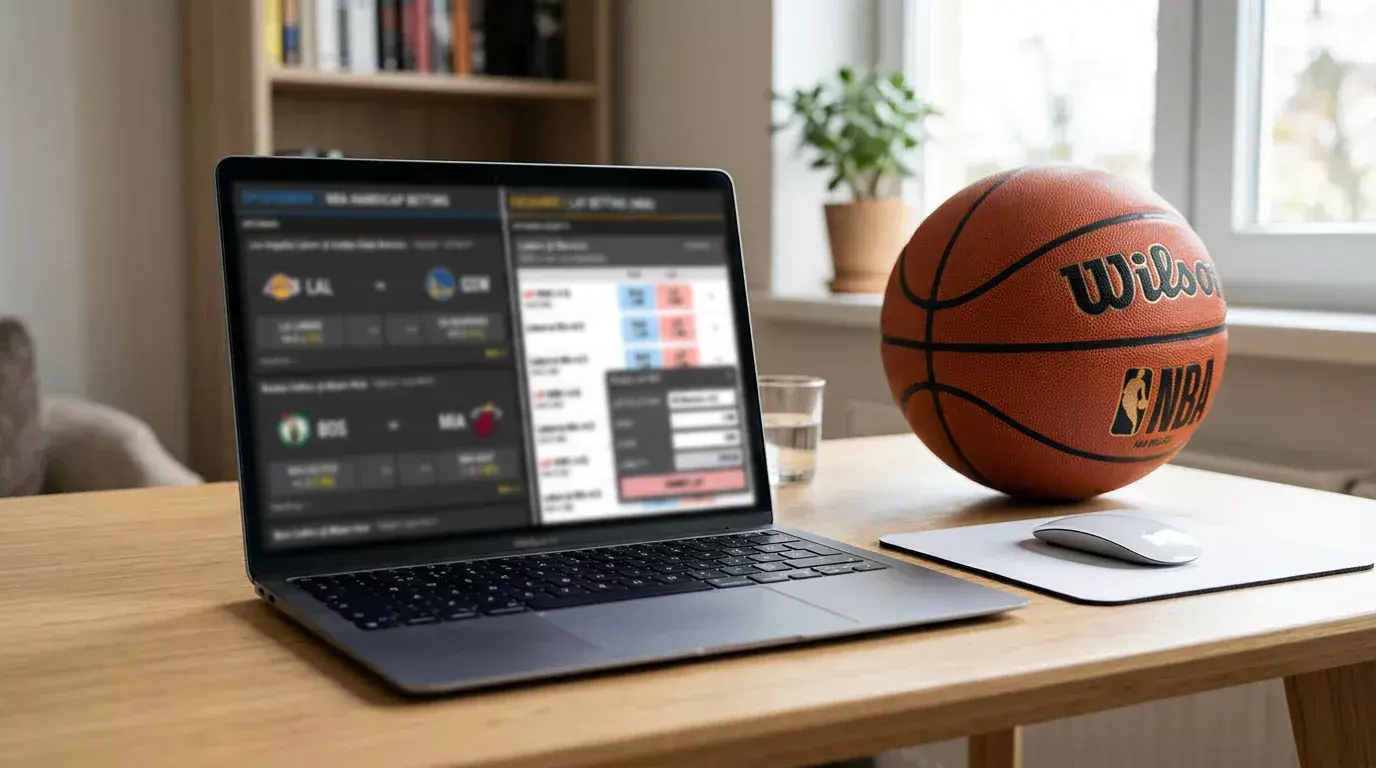
The fundamental matched-betting equation requires two sides: a back bet (at the bookmaker) and a lay bet (at a betting exchange). You back a team to cover the spread at the bookmaker, then lay the same outcome at the exchange, so that regardless of the result, the loss on one side is offset by the win on the other. When you are using a free bet rather than cash, the qualifying loss is eliminated, and the exchange win becomes your guaranteed profit.
In football, this is relatively simple because exchange liquidity on major handicap markets is deep. In basketball, the liquidity situation is less favourable. UK betting exchanges offer NBA handicap markets, but the volume of available lay bets is thinner than on Premier League football. This means the lay odds may be wider — further from the back odds — which reduces the guaranteed profit per free bet. The UK basketball betting market is projected at approximately $23.91 million in revenue, with an expected user base of 2.1 million by 2029, and as that market grows, exchange liquidity should improve. But for now, the thinness of basketball lay markets is the primary constraint.
The spread format adds a mechanical complication. In a moneyline market, the outcomes are binary: Team A wins or Team B wins. In a handicap market, the outcomes depend on the margin relative to the spread. If you back Team A at -7.5 at the bookmaker, you need to lay Team A -7.5 at the exchange. The exchange must offer the same spread for the back-lay pair to work. If the bookmaker’s line is -7.5 and the exchange only offers -7 or -8, the mismatch creates either a gap in coverage (where a specific margin results in both bets losing) or an overlap (where both bets win). Neither situation is acceptable for matched betting, which requires certainty.
Applying Free Bets to Basketball Spreads
Most UK bookmaker free bets can be used on basketball handicap markets, though the terms and conditions vary by operator. Some free bets exclude specific sports or market types; always check the small print before placing the qualifying bet. The qualifying bet itself should be placed on a market with tight back-lay spreads to minimise the qualifying loss — and basketball handicap markets are often suitable for this because the standard vig is comparable to football.
The profit from a free bet depends on the odds and the back-lay spread. On a standard basketball handicap bet at 10/11 (1.91 decimal), with a lay at 1.95 at the exchange, the guaranteed profit on a £10 free bet is approximately £4.50 after exchange commission. That is a lower return than you would typically achieve on football because the lay odds are wider, but it is still free money — and across a season of promotions, the returns add up.
Enhanced-odds promotions are particularly useful in basketball matched betting. When a bookmaker offers a price boost on a specific NBA game — say, boosting the favourite to cover at 2.00 instead of 1.91 — the enhanced price creates a larger gap between the back and lay odds, increasing the guaranteed profit. These boosts are offered frequently during the NBA season, especially during high-profile games and the playoffs, and they represent the best matched-betting opportunities in basketball.
Pitfalls and Limitations of Matched Betting on Spreads
The biggest pitfall is account restriction. Bookmakers are under no obligation to continue offering promotions to accounts they identify as matched bettors, and basketball accounts that consistently use free bets on handicap markets with corresponding exchange activity are relatively easy to flag. Football matched betting benefits from the sheer volume of participants, which makes individual accounts harder to identify. Basketball’s smaller market means your activity is more visible.
To mitigate this, avoid using free bets exclusively on basketball handicap markets. Mix your promotional activity across sports and market types, place occasional non-promotional bets to maintain the appearance of a recreational account, and do not withdraw immediately after every free-bet profit. These are standard matched-betting hygiene practices, but they are more important in a smaller market like basketball where the operator’s scrutiny is more concentrated.
Line-timing is another challenge. Basketball handicap lines move during the day as money comes in, and the bookmaker’s spread may diverge from the exchange’s spread as the two markets respond to different flows of money. If you place your back bet in the morning and wait until the evening to lay at the exchange, the line may have shifted, leaving you with a mismatch. The safest approach is to place both sides of the matched bet within a short time window — ideally within minutes of each other — to minimise the risk of line divergence.
Settlement rules differ between bookmakers and exchanges on handicap pushes. If the final margin lands exactly on the spread, some bookmakers void the bet while some exchanges settle it differently. Before placing a matched bet on a whole-number spread, confirm that both the bookmaker and the exchange treat a push identically. If they do not, you face a scenario where one side settles as a void and the other as a loss — which defeats the purpose of matched betting entirely. For a broader comparison of which UK operators offer the best basketball handicap markets and promotions, the UK bookmakers guide covers margin differences, league coverage, and promotional offerings.