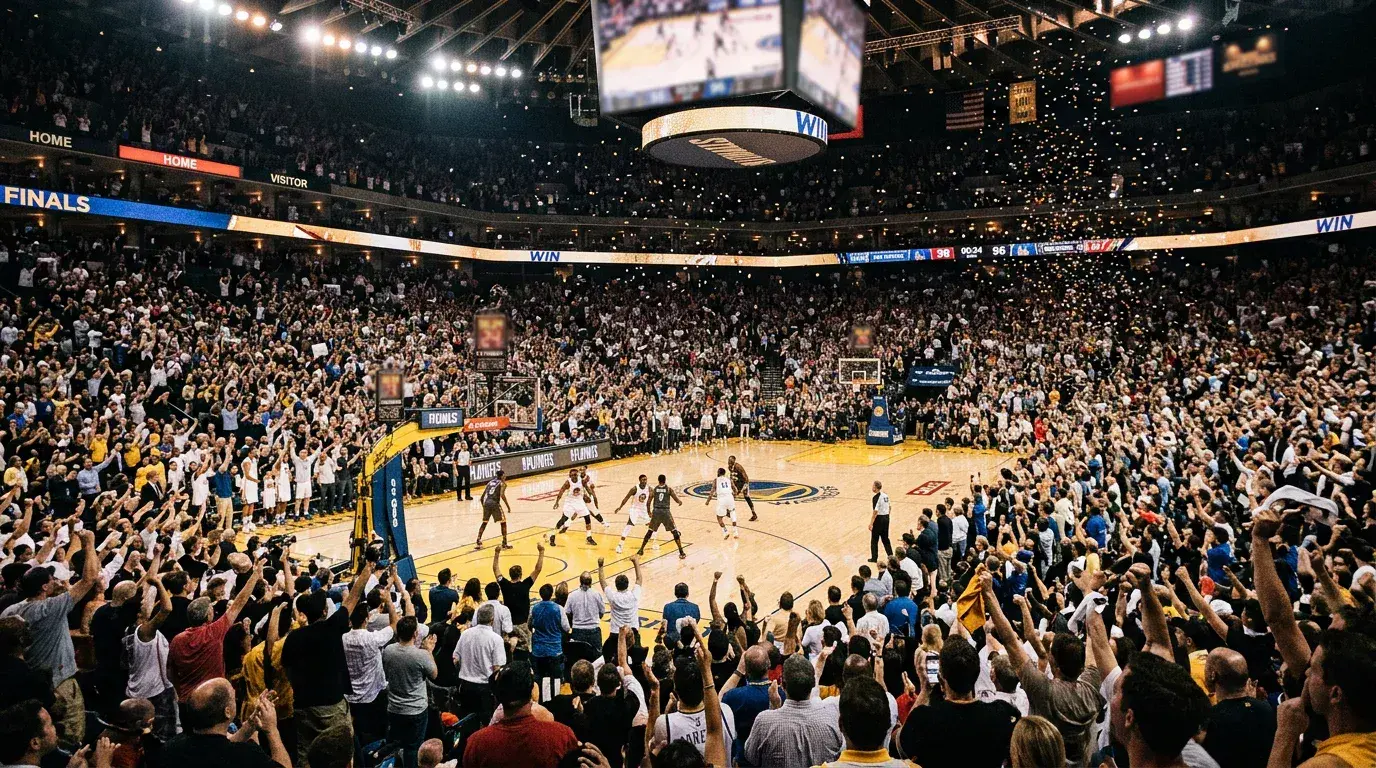


The bet that changed how I think about live handicap markets came during a 2023 playoff game. The pre-game favourite was down fourteen at half-time, and the live spread had swung to the other side entirely — the team that trailed before tip-off was now a -3.5 favourite for the second half. I took the original favourite at +3.5 live, and they stormed back to win by six. The pre-game line had been right all along; the live market had overreacted to a first-half surge. That overreaction is the engine that drives in-play handicap value.
Live betting is the fastest-growing segment of the sports wagering market, with in-play wagers leading all bet types in 2024 by volume. Basketball is uniquely suited to it: high scoring, frequent momentum shifts, and a game clock that allows bookmakers to update lines after nearly every possession. For UK punters watching NBA games in the late evening, in-play spreads offer a way to engage with games that have already tipped off before you sat down.
In-Play Handicap Adjustments: Tracking Live Spread Movements During Games
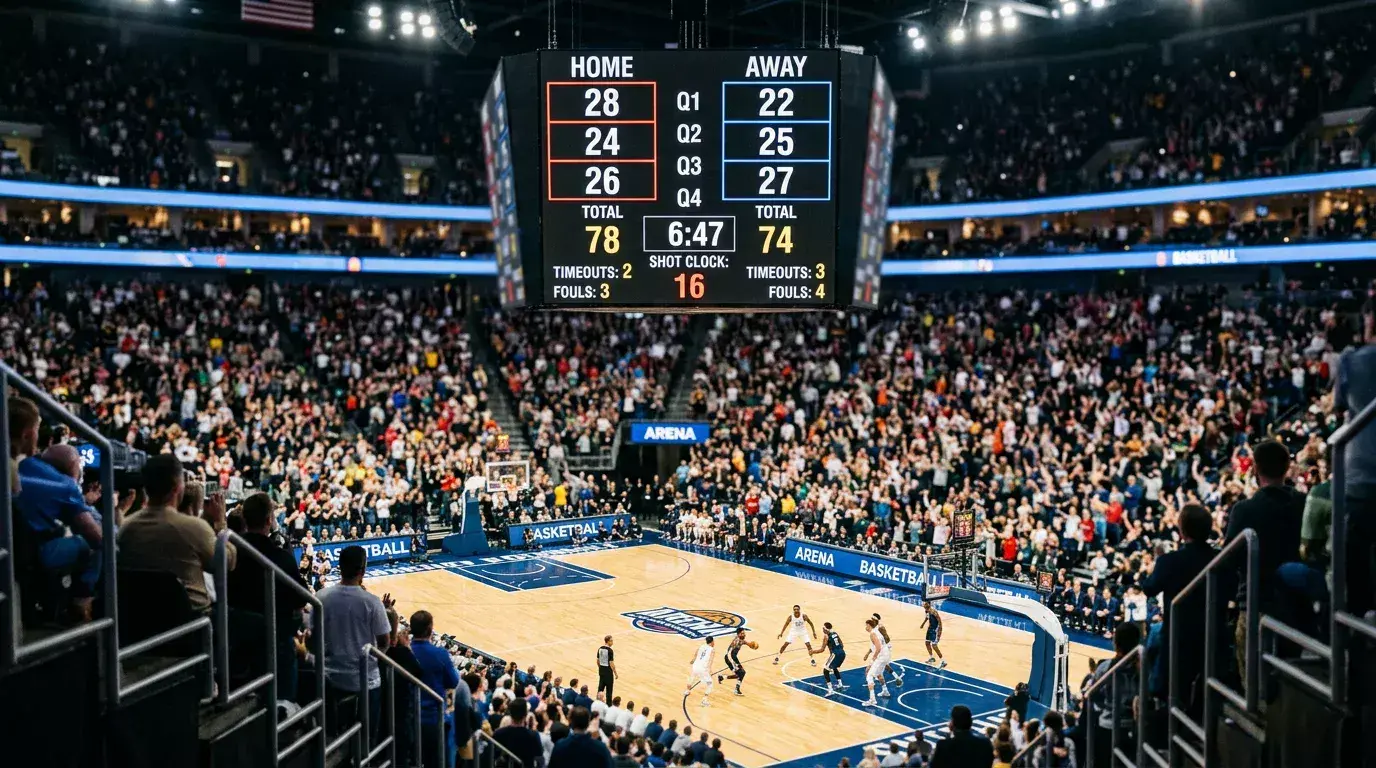
Pre-game spreads are set once and locked at the moment of your bet. Live spreads are a different animal — they move continuously, recalculated by algorithms that factor in the current score, time remaining, team strength, pace, and possession. A team that was -6.5 before tip-off might be -2.5 at the end of the first quarter if they trail by four, or -10.5 if they lead by eight. The line is a living estimate of the expected remaining margin.
What drives these movements is not just the score but the rate at which the score is changing. A ten-point lead in the first quarter, when thirty-six minutes remain, produces a smaller line shift than a ten-point lead midway through the fourth quarter. The algorithm weights recency and game clock heavily, which means a five-point run in the final three minutes can swing the live spread by four or five points in seconds.
For bettors, this creates two distinct windows of opportunity. The first is early in the game, when the live line has shifted based on a small sample of possessions. A team goes on a 12-2 run in the first five minutes and the live spread moves dramatically — but five minutes is not enough data to invalidate a pre-game assessment that was built on season-long performance. The second window is during timeouts and quarter breaks, when the line pauses briefly and you have a moment to assess whether the current price reflects genuine game-state information or short-term noise.
Betting Momentum Swings: Runs, Timeouts, and Line Reactions
I keep a rule that I break only rarely: never bet into a run. If a team has just gone on a 10-0 burst and the live line has swung in their favour, the worst time to back them is at the peak of the swing. The bookmaker’s algorithm has already priced in the run. What it has not priced in, often, is the timeout that is about to follow.
Timeouts are the market’s reset button. When the trailing team’s coach calls a timeout after a run, two things happen: the run stops, and the team regroups. In my experience, the scoring immediately after a timeout tends to favour the team that called it, because the timeout disrupts the opponents’ rhythm and allows the coach to set up a specific play or defensive adjustment. The live spread at the peak of a run is frequently the worst number available — and the number five minutes after the timeout is often significantly better.
Quarter breaks work similarly but on a larger scale. The third-quarter adjustment effect — where the trailing team makes half-time changes and comes out sharper — is well documented. If the favourite is cruising at half-time and the live spread has ballooned to -15 for the second half, there is often value in backing the underdog at that inflated number. Teams down big at the break do not always come back, but they often narrow the margin enough to cover a double-digit second-half spread.
Home teams in the NBA win roughly 60% of their games, and that home-court factor does not evaporate at half-time. If the home team is trailing at the break, the live spread may undervalue their second-half prospects, because the algorithm focuses on the current deficit while the structural advantage of playing at home — crowd energy, familiar surroundings, no travel fatigue — continues to exert influence.
Practical In-Play Spread Strategies for UK Punters
The practical challenge for UK-based bettors is timing. Most NBA games tip off between 23:00 and 03:00 UK time, which means the live market for early games is accessible before midnight, but later games run into the small hours. If you are planning to bet in-play, pick one or two games per night and commit to watching them rather than spreading your attention across a full slate you cannot follow.
My in-play workflow starts with the pre-game spread. I set a target number — the live line at which I think the value flips. If the pre-game spread is -7.5 and I believe the true margin should be closer to -5, I wait for a first-quarter deficit that pushes the live line to -4 or -3.5 and then take the favourite. The pre-game analysis provides the anchor; the live market provides the entry point. Without the anchor, you are reacting to every scoring run, and reaction is the enemy of disciplined live betting.
Staking discipline is even more important in-play than pre-game. The speed of live markets creates an urge to bet more frequently, and each bet feels smaller because the game is already underway. Resist that. I cap my in-play bets at two per game and size each one the same as my pre-game stakes. The edge, if it exists, does not improve with volume — it improves with selection.
One more practical note: not every UK bookmaker offers the same depth of in-play basketball spreads. Some operators provide live handicap markets only for marquee NBA games, while others cover the full slate but with wider margins. The strategy guide on handicap methods covers how to evaluate bookmaker depth across markets. Shop around before the season starts, and know which platforms give you the best live basketball experience.
When the Live Line Is Telling You to Walk Away
Not every live spread movement is an opportunity. Sometimes the line moves because the market knows something you do not — an injury sustained during the game, a key player picking up early foul trouble, or a tactical switch that fundamentally changes the matchup. If the live spread has moved sharply and you cannot identify why from watching the game, the smart play is to sit it out. The live market is fast, but it is not irrational. When it moves without obvious cause, respect the signal and keep your stake in your pocket.