

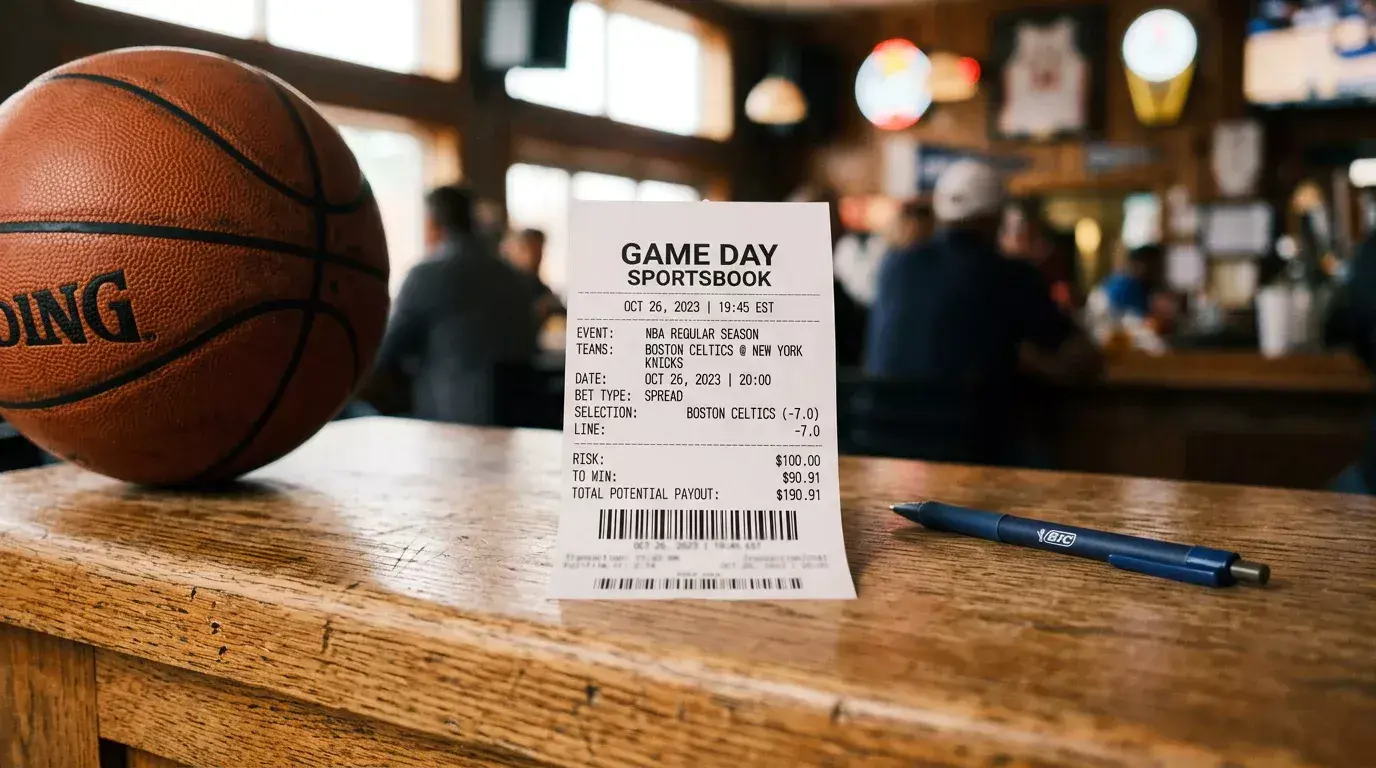
The most frustrating bet I ever placed was a -6 handicap on a game that finished with a six-point margin. Not a loss, not a win — a push. My stake came back untouched, hours of analysis returned nothing, and I sat there wondering why the bookmaker had set a whole number in the first place. That experience sent me down a rabbit hole into push mechanics, and it turns out the answer is more interesting — and more useful — than I expected.
A push is the dead heat of handicap betting: the final margin lands exactly on the spread, neither side covers, and the bookmaker refunds all stakes. It sounds like a neutral outcome, but in practice it has real consequences for bankroll management, accumulator construction, and the way you evaluate whole-number versus half-point lines. If you have ever wondered why some spreads end in .5 and others do not, this is where that question leads.
Push Rule Mechanics: Dead-Heat Refunds on Whole-Number Spreads
Last season, I tracked every NBA game where the closing line was a whole number — -3, -5, -7, -10, and so on. Out of roughly 1,230 regular-season games, a meaningful minority landed exactly on one of those key numbers. The frequency varies by number: margins of three, five, and seven are more common than margins of four or eleven, because basketball scoring clusters around certain totals due to the value of three-point shots and free throws.
A push happens when the favourite wins by exactly the number on the spread. If the line is -7 and the favourite wins 110-103, that is a seven-point margin — push. Every bettor on both sides gets their money back. The bet is void, as if it never existed. In a single bet, that means you simply reclaim your stake. In an accumulator, the push leg is removed and the remaining legs settle at adjusted odds, which reduces your potential return.
The mechanics are simple, but the strategic implications are not. Whole-number lines introduce a third outcome into what most bettors think of as a binary market. Instead of win or lose, you have win, lose, or push. That third outcome eats into your expected value, because the probability of pushing is not zero — on key numbers like 3 and 7, it can be 3-5% of all outcomes. You are not gaining anything from a push; you are just treading water while the bookmaker has already priced their margin into the line.
UK Bookmaker Policies on Push Results
I learned the hard way that not all UK bookmakers treat pushes identically. The standard policy is a full refund of the stake, but there are nuances worth checking before you place a whole-number spread bet.
Most major UK-licensed operators — and William Hill alone accounts for 37.83% of PPC clicks in the UK sports betting market, with Bet365 at 16.2% — will void a push and return your stake as free cash within minutes. The bet disappears from your settled-bets history as though it were cancelled. In accumulators, the void leg is removed and the acca recalculates with the remaining legs. A four-fold accumulator with one push leg becomes a treble.
Where it gets tricky is with promotional bets. Some free-bet offers specify that a push on a free bet does not return the free-bet token — you lose the token and get nothing back. This is not the standard push rule; it is a promotional term buried in the small print. If you are using a free bet on a basketball handicap market, check whether the token survives a push. The answer can change your choice of line.
Another edge case involves Asian handicap markets, which handle pushes differently by design. On an Asian handicap with a whole-number line, the push results in a full refund, identical to the European-style push. But quarter-point Asian lines split the stake and can produce a half-win or half-loss instead of a clean push. If you are moving between standard and Asian handicap formats, keep the push rules for each format clear in your mind — they are not interchangeable.
Half-Point Lines and Strategies to Avoid Dead Results
Bookmakers know that pushes are dead money for both sides, which is why the majority of basketball spreads are set at half-point increments: -5.5, +7.5, -3.5. The half-point makes a push mathematically impossible. The margin can only be a whole number in basketball (no 0.5-point scores exist), so a line ending in .5 always produces a winner and a loser. Clean, binary, no ambiguity.
The record-setting average margin of victory of +12.9 points in the 2025-26 NBA season does not change this calculus — it just means the range of possible outcomes is wider, and the half-point still eliminates the push at every level. Whether the spread is -2.5 or -14.5, the .5 does its job.
When you do encounter a whole-number line, you have a strategic choice. You can accept the push risk and take the number as posted, or you can “buy” the half-point by moving to an alternative spread. Buying half a point — shifting from -7 to -6.5, for example — costs you in odds. The price might move from 10/11 to 5/6 or worse. Whether that cost is worthwhile depends on how frequently the key number you are sitting on produces pushes.
For the most common NBA margins — three, five, seven — the push frequency is high enough that buying the half-point can be justified, especially if the price adjustment is modest. For less common margins — four, nine, eleven — the push frequency is lower, and the cost of buying the half-point is harder to recoup. I keep a personal table of push rates by margin for the current season, updated monthly, and use it to decide when buying the hook is a smart play versus an expensive insurance policy I do not need.
There is also the option of moving the other direction — selling the half-point to get a better price. Going from -6.5 to -7 might improve your odds from 10/11 to evens. You are accepting push risk in exchange for a higher payout per win. This works best when the key number in question has a historically low push rate, making the risk of a dead result small relative to the pricing improvement.
Making the Push Work for You, Not Against You
The push is not a glitch in handicap betting — it is a feature of whole-number lines that you can manage with the right approach. Track push frequencies on key numbers, understand how your bookmaker handles voids in singles and accumulators, and treat the half-point as a resource you can buy or sell rather than an arbitrary detail. Most recreational bettors never think about push dynamics at all, which means the bettors who do have a quiet but genuine edge in line selection.