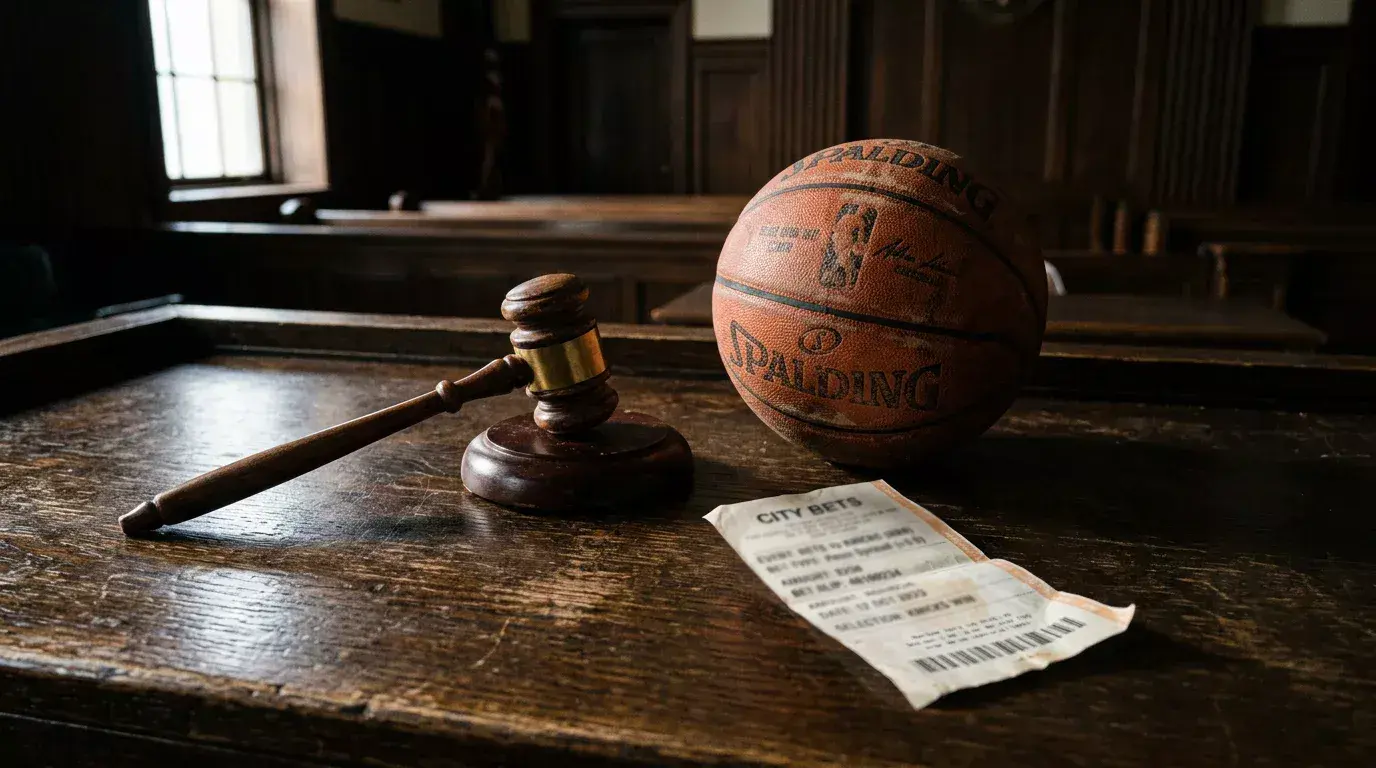
In October 2025, 34 people were arrested in connection with an illegal betting operation linked to the NBA. Among those charged were an active player, Terry Rozier; a head coach, Chauncey Billups; and a former player, Damon Jones. The charges ranged from illegal gambling to wire fraud, and the case sent shockwaves through a sport that had spent years cultivating a cosy relationship with the legal betting industry. For handicap bettors, the question was immediate and unsettling: if the people on the court are compromised, can the spreads be trusted?
2025 NBA Betting Scandal: Market Impacts and Integrity Risks
The 2025 case was not a point-shaving scandal in the traditional sense — prosecutors did not allege that games were deliberately manipulated to affect the spread. The charges centred on illegal betting activity: placing wagers through unlicensed operators, using intermediaries to circumvent the league’s gambling rules, and, in some cases, betting on NBA games while employed by the league. The distinction matters, because illegal betting by participants and deliberate manipulation of outcomes are different threats with different implications for handicap bettors.
An NCAA official interviewed by ESPN articulated the broader concern clearly: when bets are based on individual performance, match-fixing becomes easier because only one person needs to be compromised. A player does not need to throw a game — they only need to underperform slightly, or ensure they do not exceed a specific statistical threshold, for a prop bet to pay out. This is why the NCAA’s push to ban student-athlete prop bets has gained traction: the integrity risk is concentrated in markets that depend on the actions of a single individual.
For handicap bettors, the point-spread market is less vulnerable than prop markets, because the spread depends on the overall game outcome rather than one player’s statistics. Manipulating a spread requires coordinated underperformance by multiple players — which is harder to execute, harder to conceal, and carries more severe legal consequences. The 2025 arrests did not produce evidence that any spread result was affected. But the case demonstrated that the boundary between legal and illegal betting activity within the NBA is more porous than the league’s public messaging suggested.
Historical Point-Shaving and Its Impact on Spreads
The most infamous point-shaving scandal in basketball history remains the 1978-79 Boston College case, where members of the basketball team were paid by organised crime figures to keep games within the spread. The players did not necessarily lose games — they simply ensured that the margin of victory stayed below the number, allowing bets on the underdog or the “under” to cash. The scheme was effective precisely because it was subtle: a missed free throw here, a lazy defensive rotation there, and the final score landed where the fixers wanted.
The 2007 Tim Donaghy scandal extended the integrity threat to officiating. Donaghy, an NBA referee, was convicted of betting on games he officiated and of providing inside information to gamblers. His case revealed that a single referee could influence the spread through foul calls, technical fouls, and the overall flow of the game without the involvement of any player. The spread impact of biased officiating is difficult to detect in real time, which is part of what made Donaghy’s scheme so damaging — the results looked normal even when they were not.
Since 2018, more than $600 billion has been wagered on sports in the United States alone, and 2.5 million Americans have developed serious gambling problems. The sheer scale of money flowing through sports betting creates incentives for corruption that did not exist a decade ago. The more money at stake, the higher the potential reward for anyone willing to compromise the integrity of a game — and the more sophisticated the schemes are likely to become.
The common thread across these cases is the spread itself. Point-shaving is not about winning or losing — it is about controlling the margin. A player who shaves points can still appear to be competing honestly, because the team might win the game. The corruption is invisible to the casual viewer and often invisible to the bookmaker as well, because the final score falls within the range of normal outcomes. The spread, by its nature, creates a target that is easier to hit precisely than an outright result, which is why handicap markets are the primary vehicle for integrity manipulation in basketball.
How UK Punters Can Protect Themselves from Integrity Risks
The uncomfortable truth is that no individual bettor can fully protect themselves from match-fixing or point-shaving. If a game has been compromised and the spread has been manipulated, you will not know it until after the investigation — which might take months or years. But there are practical steps that reduce your exposure to integrity-related losses and position your handicap betting on firmer ground.
First, favour high-profile games over obscure ones. The NBA’s primary integrity monitoring is concentrated on nationally televised games, playoff fixtures, and marquee matchups. Lower-profile regular-season games — particularly those involving teams with nothing to play for late in the season — receive less scrutiny and are, in theory, more susceptible to manipulation. This does not mean every Tuesday-night game is fixed. It means that the oversight infrastructure is less dense, and the deterrent effect of monitoring is weaker.
Second, be cautious about unusual line movement that lacks an obvious explanation. If a spread moves sharply against the expected direction without injury news, lineup changes, or weather events to explain it, the movement could reflect informed money — and “informed” in an integrity context is not a compliment. Paul Tonko, a U.S. Representative, argued in a letter to the NBA that voluntary self-policing by leagues and state regulators should be considered ineffective. That assessment, while directed at American regulators, carries implications for anyone betting on NBA games, including UK punters operating under UKGC-licensed bookmakers.
Third, diversify across leagues. The NBA is not the only basketball market available to UK punters, and spreading your betting activity across the EuroLeague, Liga ACB, and other competitions reduces your concentration risk in any single league’s integrity framework. Each league has its own monitoring systems, and the probability that all of them are simultaneously compromised is lower than the probability of issues in any one. For a broader perspective on maintaining healthy betting practices in the face of these risks, the responsible gambling guide covers the tools and support available to UK punters.