

The first college basketball spread I ever bet was a 22-point line. I had been betting NBA spreads for over a year and thought I understood handicap markets. Then I saw a top-ranked conference team favoured by 22.5 against a mid-major opponent, and my instinct screamed that no basketball game could be that lopsided. The favourite won by 34. College basketball exists in a different universe from the NBA when it comes to competitive balance, and the handicap lines reflect that disparity in ways that can surprise even experienced NBA spread bettors.
NCAA vs NBA Markets: Explaining Wider Point Spreads in College Basketball
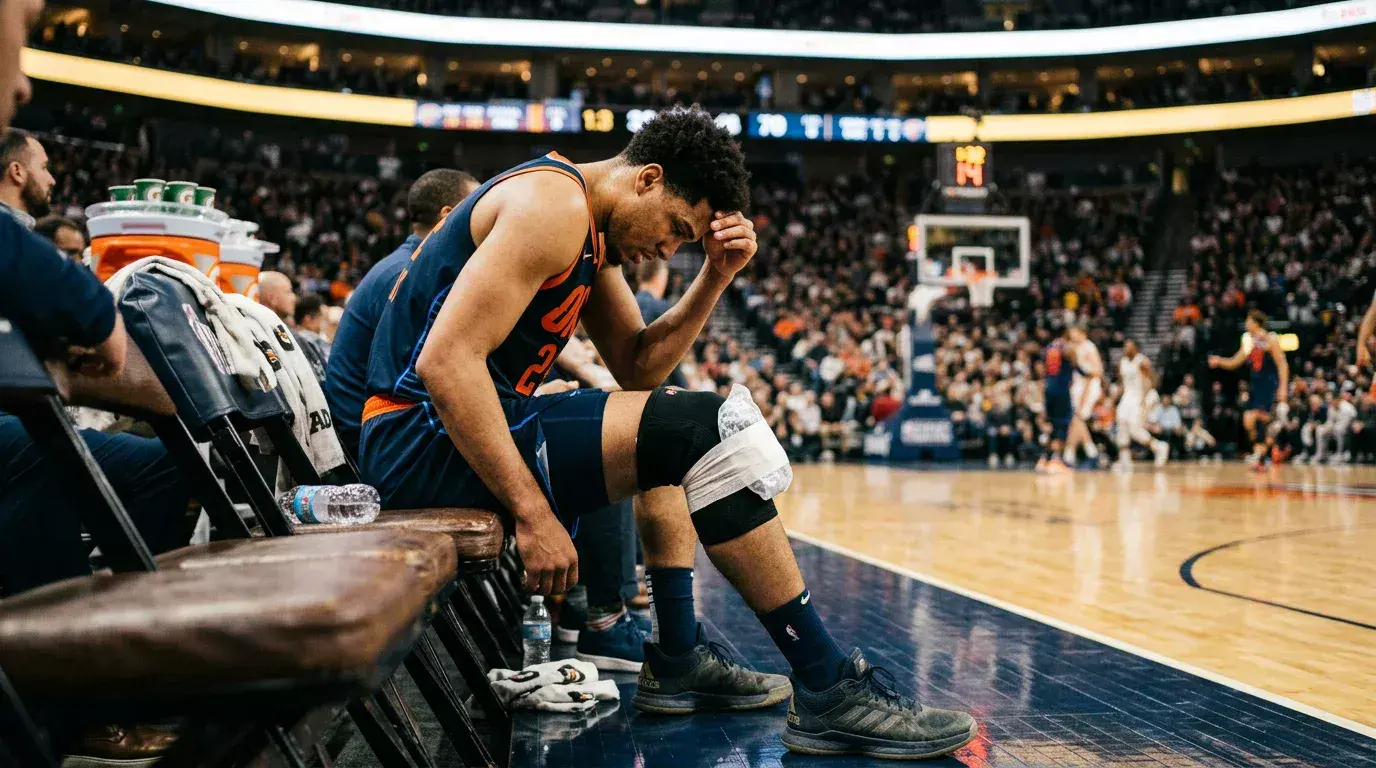
The NBA is a league of relative parity. Even the worst team in the league employs players who are among the best 450 basketball players on the planet. Roster talent compresses the scoring distribution: the gap between the best and worst teams, measured by point differential, is significant but bounded. The average margin of victory in the 2025-26 NBA season was +12.9 points — a record — but the vast majority of games fall within a narrower range.
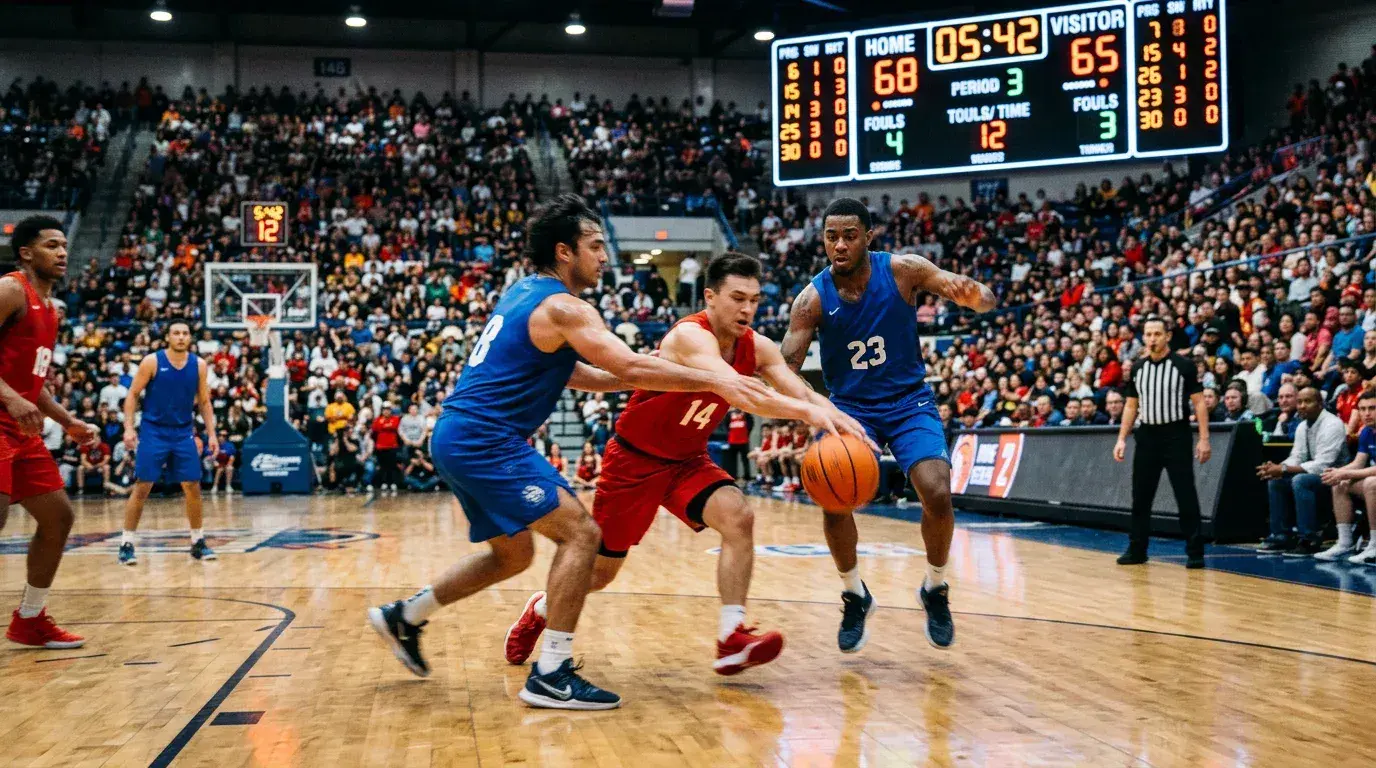
College basketball has no such compression. A programme like Duke or Kansas recruits the best high-school players in the country, many of whom will play in the NBA within two years. Their opponents on any given night might be a small-conference school whose best player would struggle to make a Division I roster at a power conference. The talent gap between the top and bottom of Division I basketball is vastly wider than anything in the NBA, and the spreads reflect it. Lines of 20, 25, and even 30-plus points are commonplace during non-conference schedules in November and December.
Shorter game length amplifies the gap. College basketball uses two 20-minute halves, while the NBA plays four 12-minute quarters. The additional eight minutes in the NBA gives trailing teams more opportunity to mount comebacks or narrow the margin in garbage time. In college, once a dominant team builds a lead, the game ends sooner — and the final margin often reflects the true talent disparity more starkly than an NBA game would.
The shot clock difference matters too. The NCAA uses a 30-second shot clock compared to the NBA’s 24 seconds, which means fewer possessions per game and lower combined scores. Fewer possessions reduce the sample size of scoring opportunities within any single game, which can increase variance — a factor that cuts both ways when betting wide spreads.
Motivation, Conference Play, and March Madness Effects
Motivation in college basketball is a different animal from the NBA. Professional players are paid to perform every night, regardless of the stakes. College players are amateurs whose emotional investment fluctuates wildly based on the context. A rivalry game against a hated in-state opponent produces a level of intensity that a mid-week non-conference game against a team nobody has heard of simply cannot match. That emotional variability shows up in spread results, and it is one reason college basketball ATS records are harder to predict than NBA ones.
Conference play, which begins in January, reshapes the handicap landscape. During non-conference scheduling in November and December, the mismatches are extreme — power-conference teams play guarantee games against smaller schools, producing the widest spreads of the season. Once conference play begins, the talent gap narrows because teams are playing opponents of comparable recruiting quality. Spreads tighten, games become more competitive, and the ATS landscape shifts toward a different set of analytical factors: familiarity between coaches, second-meeting adjustments, and travel schedules within the conference footprint.
March Madness — the NCAA tournament — is where college basketball handicap betting reaches its peak intensity. The single-elimination format produces upsets at a rate that would be unthinkable in the NBA playoffs. A 12-seed beating a 5-seed is not a miracle; it happens in roughly a third of tournament matchups at that seeding. NCAA President Charlie Baker has pushed for a nationwide ban on prop bets involving student athletes, citing integrity concerns that do not apply to the same degree in professional leagues. The regulatory conversation around college betting is evolving, and UK punters should be aware that the market may change as American policymakers respond to growing concerns about wagering on amateur athletes.
Can UK Punters Bet on College Basketball Handicaps?
The short answer is yes, but with limitations. Most major UK-licensed bookmakers offer handicap markets on college basketball, particularly during the NCAA tournament. During the regular season, availability depends on the operator — some cover only the top-25 ranked matchups, while others offer spreads on a wider slate of games. The UK basketball betting market is projected at roughly $23.91 million in revenue, with an expected user base of 2.1 million by 2029, and college basketball contributes a growing share of that total, especially during March.
The challenge for UK punters is information asymmetry. NBA data is abundant, publicly available, and updated in real time. College basketball data is fragmented, harder to access, and less reliably analysed. There are over 350 Division I teams, and no casual bettor can track them all. The bookmakers, however, invest heavily in modelling college basketball — and their models are typically better calibrated than the average punter’s analysis, particularly for games involving unfamiliar mid-major programmes.
If you are going to bet college basketball handicaps from the UK, specialise. Pick a conference or a tier of teams that you can follow closely, build familiarity with the rosters and coaches, and ignore the rest. Betting the entire college basketball slate is a recipe for losses, because the information disadvantage on unfamiliar matchups is too large to overcome with general principles. The punters who profit from college basketball spreads are the ones who know their corner of the market better than the bookmaker does — and that requires focus, not breadth. For a comparison of how NBA spreads behave differently, the NBA handicap betting guide covers season data, spread trends, and access points for UK punters.